
Key reasons to read the article
- Discover how the Gulf conflict is fueling a ‘silent poverty’ surge that could push millions of families across South Asia below the poverty line.
- Gain an inside look at the deeper impact of the unprecedented standoff between Iran, U.S. and Israel over the Strait of Hormuz.
- Understand the invisible economic fracture: How the chaos in the Gulf is cutting off the US$115 billion annual remittance lifeline that keeps households in South Asia afloat.
- Explore the tragic irony facing Asia today – in the race to survive the energy shock, the world’s most climate-vulnerable region is being forced back into a coal-fired future that could trigger an environmental disaster for decades.
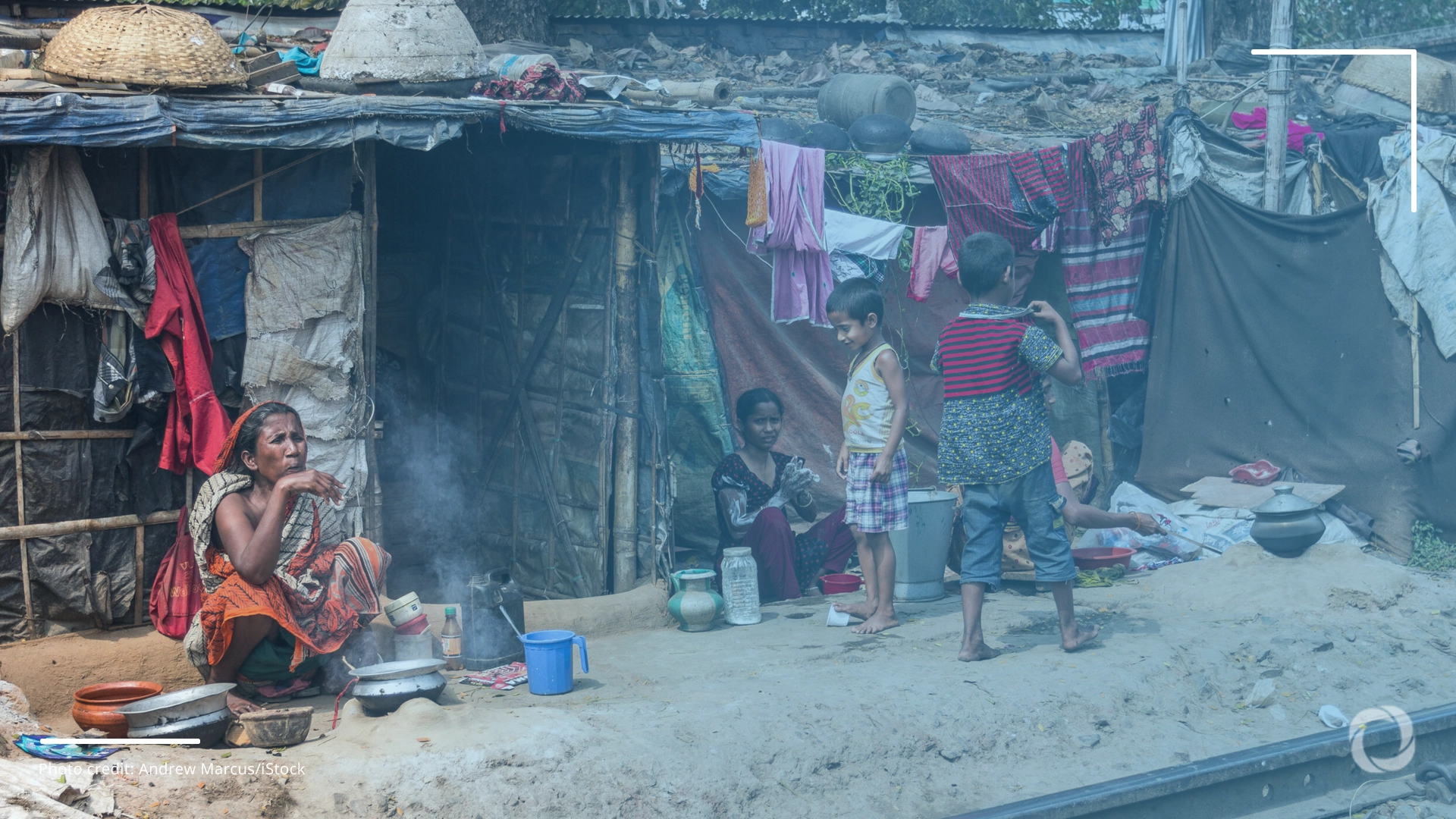
Rashid Ahmed visited three fuel stations in Dhaka, Bangladesh, before his first delivery deadline. At each one, he found empty tanks or queues stretching around the block. The delivery rider waited for hours at a pump in Mirpur district, watching the operator turn customers away. Each hour his motorcycle remained idle, his family’s income vanished, inching him closer to poverty.
Rashid is not unique. He is one of 8.8 million people across Asia and the Pacific that the United Nations Development Programme (UNDP) now warns are at risk of being pushed into poverty, part of the projected 32 million globally, as a result on a reliance on imported energy and vital supply chains.
The crisis began with an escalation in the conflict that broke out on 28 February when the United States and Israel launched military strikes on Iran, followed by retaliatory actions that led to the closure of the Strait of Hormuz, severing a key energy lifeline on which much of South Asia’s economy depends.
The anatomy of vulnerability
More than 80% of the crude oil and liquefied natural gas (LNG) passing through the Strait of Hormuz is destined for Asian markets. For South Asia, the exposure is even sharper. India, Bangladesh, and Pakistan sourced nearly two-thirds of their total LNG through the Strait in 2025.
- Bangladesh imports approximately 92% of its oil.
- Pakistan imports around 80%.
- India sources more than 40% of its crude and 90% of its liquefied petroleum gas from West Asia.
- The Philippines imports nearly 97% of its crude oil from the Gulf.
- Vietnam imports about 87%.
- Thailand imports 74%.
- Indonesia imports nearly two-thirds of its crude oil.
Most countries hold reserves that will last for just 20 to 50 days, according to the Economic Research Institute for ASEAN and East Asia.
The pathway pushing 8.8 million into poverty
The UNDP assesses the poverty risk through three main transmission channels: energy, trade, and labor markets. Together, these turn a supply breakdown into a crisis for households, small businesses, and public budgets.
The path from a closed strait to an empty plate unfolds in five consecutive steps.
Diesel moves first. It powers the trucks carrying food to markets, the generators keeping factories running, and the buses millions depend on daily. Oil prices in the region are up 45% and gas 55%. “Trucking costs have started climbing, and that will feed into everything from flour to fertilizer,” said Khalid Waleed of the Sustainable Development Policy Institute in Islamabad.
Food prices follow. In many South Asian households, food already accounts for about half of total spending. Now that the wheat harvest has begun, food prices could spike well beyond current levels as combine harvesters, threshers, and tractors all run on diesel, warns Avinash Kishore of the International Food Policy Research Institute.
Agriculture then comes under pressure. A third of the global fertilizer trade passes through the Strait. Urea prices have surged by about 50%, according to Oxford Economics. Bangladesh has closed five of its six fertilizer factories. In Thailand, farmers are leaving crops in the ground as harvesting costs become prohibitive.
Incomes shrink simultaneously. Informal workers who, according to the World Bank, make up 80% to 90% of the labor force in South Asia, are often the first to lose their jobs when factories slow or shut down. This is already a daily reality in India, for instance, where workers are returning to villages as high diesel costs and unreliable power supplies disrupt factory work.
Finally, the remittance pipeline fractures. More than 20 million South Asians work in the Gulf. India receives US$50 billion annually in Gulf remittances, Sri Lanka US$8 billion, Pakistan US$38.3 billion, Nepal US$5 billion, and Bangladesh US$13.5 billion. As that pipeline begins to crack, the flow of money back home slows down.
The result is households squeezed from every direction all at once, earning less, paying more, and receiving less from abroad.
Even before the first missile struck, 75.6% of South Asia’s population, or 1.48 billion people, were already living on less than US$6.85 a day, the World Bank’s poverty line for upper-middle-income countries. These people were trying to climb out of poverty. They had not escaped vulnerability.
Governments are buying time, not solutions
Across the region, responses have been blunt and short-term. Pakistan has closed schools and moved to a four-day working week. Sri Lanka announced that Wednesdays would be a public holiday. Bangladesh has rationed fuel and stationed troops at oil depots while spending US$880 million, nearly 15% of its average monthly imports, on 11 emergency LNG spot cargoes at double pre-war prices.
According to UNDP Administrator Alexander De Croo, the situation is forcing countries to choose between short-term price control and long-term investment in health systems, education, and jobs, a dilemma he described as both unacceptable and preventable.
The coal comeback
Another key response has been a greater reliance on coal, which remains one of the few energy sources that can be deployed quickly and reliably at scale. This has triggered South Asian countries to increase output, delay the closure of coal-fueled plants or bring idle capacity back as LNG supplies tighten.
Indonesia has increased coal production. Thailand has revived the retired Mae Moh plant. The Philippines has ramped up coal-fired generation. South Korea has delayed the closure of two coal plants by six months. India and Vietnam have also increased their reliance on coal-fired power as LNG prices surge. Newcastle coal, Asia’s benchmark, is up 13% since the war began.
The irony lies in where this coal is being burned. Asia is one of the most climate-vulnerable regions on earth, already warming almost twice as quickly as the global average. In 2024 alone, Asia recorded 167 climate disasters causing losses exceeding US$32 billion. Every new coal contract deepens the structural trap.
New coal investment risks locking countries deeper into carbon-intensive infrastructure, making the eventual path to net-zero more costly, Dr. Elbinsar Purba, a fellow at the ISEAS-Yusof Ishak Institute, explained.
For Rashid and 8.8 million others, the shock is already being felt in lost income, rising food prices, and fewer opportunities. But the bigger risk lies ahead. As governments turn to coal to contain the crisis, the same shock that is pushing millions toward poverty today may also lock the region into a more expensive, carbon-intensive future, one that will be far harder to reverse.
